



Biometric Voter Management
A Foundation for Fair Elections
Summary: A structured process for recording and verifying voter identities using fingerprints or facial features reduces fraud and prevents impersonation and duplicate registrations. It ensures that each eligible person can vote only once, strengthens fairness and accountability in elections, and supports reliable voting processes even in remote areas with limited infrastructure.
A fair election relies on accurate voter registration and strong organization. While nations with established civil registries can easily generate voter lists, different regions across the globe lack official identification, as large populations remain unregistered. In these contexts, biometric voter registration becomes a necessity, which creates a secure foundation for voter management where none previously existed.
The use of biometrics creates a reliable foundation for voter management that confirms each voter's identity, reduces errors, limits fraud, and ensures voter records are complete and consistent. This approach uses high-security systems and software which, with the help of biometric markers such as fingerprints, face recognition or others, simplify voting for both the election committee and voters.
What is Voter Management?
When it comes to elections, voter management refers to the extensive process of registering, validating and managing voter identities to ensure that one person can cast only one vote. Governmental institutions, polling stations, voting committees and supervisors are all included in this process. Thus, manual registration with pen and paper proves to be obsolete and often untrustworthy.
Voter management includes a lifecycle of capturing biographic and biometric data, deduplicating records to prevent fraud and impersonation, and maintaining an accurate voter registry that can accommodate the growing population. By using biometric identifiers like fingerprints or face recognition, voter management systems (often abbreviated to VMS) eliminate human error and delays caused by manual processing, providing a lawful and transparent voting process.
Which Biometric Technologies Are Used in Elections?
Modern elections use multi-modal biometrics to ensure no citizen is excluded due to physical limitations. The modalities used in voter management are these:
- Fingerprints: The most common method due to its reliability and the portability of modern scanning devices that are compact yet swift and precise.
- Face: Facial recognition is used for both identification and liveness detection to prevent impersonation. Furthermore, integration with ICAO standards ensures high-quality image enrollment suitable for official registries.
- Iris: Iris recognition technology identifies voters by the unique patterns of the iris. Because the iris remains stable throughout a person's life - and is distinct even in identical twins - it provides an exceptionally high level of security.
- Voice: It offers an inclusive alternative for citizens with physical disabilities or limited access to polling stations. On election day, the system compares the voter's live speech against the stored sample to confirm a match and authorize the vote.
How Does the Biometric Voter Management Process Work for Citizens?
The process is designed to be streamlined and user-friendly, typically following three main steps:
- Pre-Registration: Citizens typically can provide biographic info via an online portal, receiving a QR code that reduces on-site registration time (often from six minutes down to two).
- Biometric Enrollment: At a polling station, a voter's face or other modality is captured using a biometric kit. This data is checked in real-time for "liveness" and quality.
- Data Processing: All collected data is consolidated at a central location for validation and processing. Ineligible and duplicate records are identified and removed, forming the foundation of the voter registry.
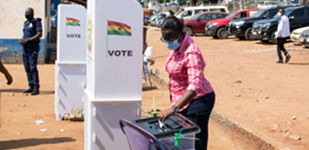
- Verification and Voting: On election day, the voter presents themselves at the polling site. A quick biometric scan matches their live traits against the registry. Once verified, they are cleared to cast their vote, ensuring only eligible, unique individuals participate.
What is a Biometric Registration Kit and how Can it Be Used?
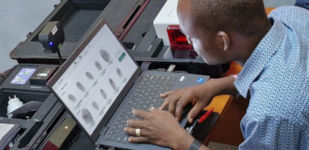
A Biometric Registration Kit is a portable and mobile station built to capture and process biographic and biometric data. It is usually a suitcase-style box, which contains a laptop and has integrated high-precision fingerprint scanners, iris cameras and facial recognition tools – everything fits into a single, cohesive system. The internal software performs real-time data validation and liveness detection, ensuring that every enrolled identity is unique and the data is accurate.
These kits are effective in national-scale projects like voter registration and national ID enrollment. They can also be used in remote areas lacking reliable electricity or internet, as the kits can fully function offline.
Are Biometric Technologies Accurate Enough for Voter Management?
Yes. Today's algorithms are highly sophisticated. By using neural network-based approaches, systems can accurately identify individuals even in challenging lighting or with low-quality scans. Furthermore, the inclusion of "liveness detection" ensures that the system cannot be fooled by photos or silicone molds and is immune to spoofing attacks. Biometric technologies undergo rigorous testing, both in-house by the biometric provider and via external evaluations and benchmarks, like the ones delivered by the National Institute of Standards and Technology (NIST).
Can ABIS Software Be Beneficial for Voter Management?
An Automated Biometric Identification System (ABIS) is essential for election integrity. One of its benefits regarding elections is deduplication.
Before a national election, an ABIS performs a rapid comparison and matching, checking every registration against the entire database. This allows the system to:
- Identify individuals attempting to register multiple times under different names.
- Detect and flag suspected underage records.
- Clean the registry of fraudulent voters, ensuring the final voter roll is fully transparent and up to date.

Director at Neurotechnology
Can Biometric Voter Registration Systems Operate in Remote Locations with Limited Internet Access?
Yes, biometric voter registration systems can operate in isolated locations due to the multifunctionality of biometric kits. Modern biometric kits are portable, "all-in-one" registration stations that can operate fully offline, requiring only a simple desk for setup. Their rugged design ensures they can withstand diverse environments and weather conditions, making them a great solution for remote areas. These stations are easily customized, ensuring that even the most isolated locations can participate in a secure and organized electoral process.
Final notes
Voter management is a delicate process that requires careful handling and expert attention. With the help of the Automated Biometric Identification System (ABIS), election committees can ensure that data remains secure, registries stay precise and the elections can run smoothly. This modern approach doesn't just simplify the voting procedure - it strengthens the fairness of the election.
Related Case Studies and Press Releases
2.47 million voters registered in 6 weeks, 27,192 duplicate registrations and 529 underage suspects identified.
17 million voter records deduplicated, almost 16 thousand cases of duplicate registrations identified.

46.5 million voter records deduplicated, 6 million duplicates and underage records found in preparation for the 2018 election.
help you achieve your biometric data management goals.


